

Waking up with a sticky mouth and unpleasant breath is common. Still, that does not mean you should ignore it. In many cases, Dry Mouth at Night and Morning Bad Breath are closely connected, and the reason is simpler than most people think.
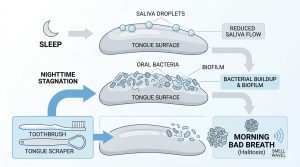
During sleep, your mouth makes less saliva. That matters more than it sounds. Saliva helps wash away food particles, balance acids, and keep odor-causing bacteria under control. When saliva drops overnight, bacteria get more time to grow, especially on the tongue, between the teeth, and along the gumline. That is why many people notice bad breath first thing in the morning. Mayo Clinic and NIDCR both note that dry mouth commonly happens during sleep and can raise the risk of bad breath, tooth decay, and oral infections.
For some people, the problem is mild and goes away after brushing. For others, it keeps coming back. If that sounds familiar, your mouth may be telling you that something needs attention.
Why Dry Mouth Gets Worse at Night
Your body naturally slows saliva production while you sleep. That is normal. The trouble starts when other factors add to it.
Sleeping with your mouth open is one of the biggest reasons. If you snore, have nasal congestion, allergies, or mild airway blockage, you may breathe through your mouth for hours without realizing it. That steady airflow dries the soft tissues inside the mouth and leaves you with a rough tongue, sticky saliva, and stale breath by morning. Cleveland Clinic notes that mouth breathing can leave people waking with a dry mouth and serious morning breath.
Dehydration can also make things worse. If you do not drink enough water during the day, or if you have alcohol or too much caffeine at night, your mouth may feel even drier by morning. Some medications can do the same thing. Common examples include antihistamines, antidepressants, blood pressure medicines, and some anxiety medications. Dry mouth is also linked with certain medical conditions, including reflux, diabetes, and salivary gland disorders.
So yes, morning breath can be normal. But when it becomes strong, frequent, or stubborn, it often means dryness is no longer a small issue.
The Real Connection Between Dry Mouth and Bad Breath
A healthy mouth is not just about brushing. It is also about balance. Saliva plays a quiet but powerful role in that balance.
When saliva is reduced, bacteria break down leftover food particles and dead cells more easily. That process releases sulfur compounds, which are one of the main reasons bad breath smells unpleasant. The tongue, especially the back of the tongue, often becomes the main area where these odors build up.
This is why some people brush their teeth well and still wake up with bad breath. The problem may not be poor brushing alone. It may be a dry environment in the mouth overnight, plus bacteria sitting on the tongue or around the gums for hours.
That dryness can also make other issues more likely. A dry mouth raises the risk of cavities, irritated gums, coated tongue, and fungal overgrowth. Over time, these can make breath smell worse and create a cycle that is hard to break. NIDCR states that persistent dry mouth can increase the risk of tooth decay and fungal infections because saliva helps control harmful germs.
Signs That Dry Mouth May Be the Main Problem
You do not always need a test to suspect nighttime dry mouth. Sometimes the clues are obvious.
You may wake up with your lips feeling dry or stuck together. Your tongue may feel rough, coated, or slightly sore. Water may seem unusually comforting first thing in the morning. Some people notice a bitter taste, thick saliva, or a strange film in the mouth. Others feel like they need to clear their throat often.
If your breath improves quickly after drinking water and cleaning your mouth, dry mouth is likely part of the issue. If the smell comes back fast, there may also be gum disease, plaque buildup, cavities, or mouth breathing involved.
Daily Habits That Can Make It Worse
A few small habits can quietly feed the problem.
Skipping floss at night leaves food and plaque between the teeth. Not cleaning the tongue gives odor-causing bacteria a place to stay. Late-night sugary snacks can feed bacteria while you sleep. Smoking and vaping can dry the mouth and irritate oral tissues. Alcohol-based mouthwashes may also make dryness worse in some people.
Even something as simple as sleeping in a warm room with dry air can have an effect. In winter, many people notice stronger morning dryness because indoor air becomes less humid.
Sometimes the cause is not only in the mouth. Acid reflux may leave a sour or bitter taste, especially in the morning. Nasal blockage can push you into mouth breathing all night. These details matter because the right treatment depends on the real cause. Cleveland Clinic notes that halitosis may be related not only to oral hygiene, but also to dry mouth and reflux.
How to Treat Dry Mouth at Night and Morning Bad Breath
The good news is that many cases improve with simple changes.
Start with hydration. Drink enough water during the day, not just before bed. If your body is running low on fluids, your mouth usually pays the price.
Brush well before sleep and clean between the teeth. Nighttime oral care matters more than many people realize because bacteria stay active while you sleep. Do not rush your tongue cleaning either. A tongue scraper or soft toothbrush can make a real difference.
Try to reduce mouth breathing. If your nose is often blocked, that deserves attention. Allergies, sinus issues, or a deviated septum can all push you toward open-mouth sleep. In some people, treating the nose helps the mouth.
You may also benefit from a humidifier at night, especially during colder months. If you take medications that cause dryness, ask your physician or pharmacist whether that side effect is expected. Do not stop medication on your own, but it is worth asking.
Sugar-free gum during the day can help stimulate saliva. Some people also benefit from dry-mouth rinses or saliva-supporting products made for xerostomia. Mayo Clinic notes that treatment may include antibacterial rinses when plaque buildup is part of the problem.
When It Is Time to See a Dentist
Morning breath alone is not always a warning sign. But persistent dryness should not be brushed aside.
If you have bad breath every day, frequent cavities, bleeding gums, a coated tongue that does not improve, a bad taste that keeps coming back, or a mouth that always feels sticky, it is smart to get checked. Chronic dry mouth can sometimes point to gum disease, untreated decay, salivary gland problems, fungal infection, or an underlying health issue.
A dentist in Woodbridge can look for plaque buildup, gum inflammation, early decay, tongue coating, and other oral causes that are easy to miss at home. In many cases, a proper exam can tell whether the problem is mostly dental, airway-related, or connected to a broader health issue.
If you have been searching for a woodbridge dentist because your morning breath keeps coming back, this is one of those concerns worth checking sooner rather than later. A dry mouth may seem minor, but over time it can affect comfort, confidence, and long-term oral health.
Why This Issue Matters More Than People Think
A lot of people try to hide morning breath. Very few try to understand it.
That is the bigger issue. Your mouth is not supposed to feel dry every night. Your breath is not supposed to stay unpleasant every morning. When these problems become routine, they often point to something fixable.
Sometimes the solution is better nighttime oral care. Sometimes it is cleaner gums, a healthier tongue, better hydration, or less mouth breathing. And sometimes it takes a clinical exam to find the missing piece.
In modern dentistry in Woodbridge, small symptoms matter because they often show up before bigger problems do. Paying attention now can help prevent future issues like gum disease, enamel damage, or repeated decay.
Final Thoughts
If you regularly wake up with a dry mouth and unpleasant breath, do not assume it is something you simply have to live with. Dry Mouth at Night and Morning Bad Breath often have a clear cause, and in many cases, the right treatment is straightforward once that cause is identified.
A careful dental assessment can help you understand whether the problem is linked to oral hygiene, gum health, mouth breathing, reflux, or another factor. If you are looking for a trusted dentist in Woodbridge or a welcoming dental office in Woodbridge, Milani Dentistry is here to help with thoughtful, modern care. To book an appointment, call +1-905-856-9966.
FAQ
1. Is morning bad breath normal?
Yes, mild morning bad breath is common because saliva decreases during sleep. But if the odor is strong every day or lasts long after brushing, it should be checked.
2. Can dry mouth really cause bad breath?
Yes. Saliva helps clean the mouth and control bacteria. When your mouth becomes dry, bacteria and odor can build up more easily.
3. Why is my mouth dry when I wake up?
Common reasons include mouth breathing, snoring, nasal congestion, dehydration, certain medications, and reduced saliva production during sleep.
4. Can acid reflux cause bad breath in the morning?
Yes, it can. Reflux may leave a bitter or sour taste and can contribute to unpleasant morning breath in some people.
5. Does cleaning the tongue help with morning breath?
Very often, yes. The tongue can hold a large amount of bacteria and debris, especially overnight.
6. When should I worry about dry mouth at night?
If it happens often, causes trouble swallowing, comes with cavities or gum bleeding, or makes your breath bad every day, it is worth a dental or medical evaluation.
7. What is the best way to reduce morning bad breath?
Brush before bed, floss daily, clean your tongue, stay hydrated, reduce mouth breathing, and get checked if the problem keeps returning.
8. Can a dentist help with dry mouth?
Yes. A dentist can check for plaque, gum disease, decay, tongue coating, and other oral causes, and guide you toward the right next step.
