

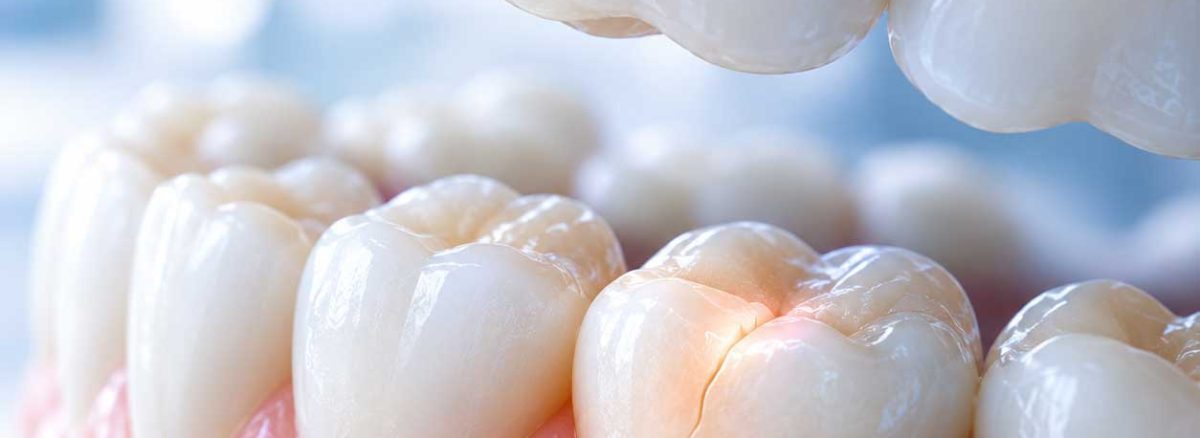
You take a bite of something ordinary — a sandwich, an apple, a piece of toast — and suddenly there’s a jolt of pain from one particular tooth. It’s unsettling, and it’s also one of the more common complaints we hear from patients. The good news is that pain on biting almost always has a specific, findable cause. The less convenient news is that you usually can’t tell what that cause is just by how it feels.
Sometimes it’s nothing dramatic — a stray piece of food wedged between two teeth, or a filling that’s sitting a touch too high. Other times, though, the same symptom points to something that needs real attention: decay working its way toward the nerve, a crack running through the tooth, or an infection brewing beneath the surface. When a tooth hurts when biting, the only way to know for certain which of these you’re dealing with is to have it looked at properly, which is exactly why a dentist in Woodbridge will want to examine the tooth rather than guess from a description over the phone.
What’s Actually Happening When You Bite Down
Every time your teeth come together, the force travels through more than just the enamel. It passes through the tooth itself, the ligament anchoring it to the bone, the bone underneath, and any fillings or crowns already in place. If any one of those structures is irritated, inflamed, or damaged, that pressure is what sets off the pain.
The way the discomfort presents can vary quite a bit from one person to the next:
- A sharp jab that only happens while you’re chewing
- Pain that shows up specifically as you release your bite
- One tooth that’s tender no matter how gently you press on it
- A dull ache that lingers after a meal
- Sensitivity to hot or cold that shows up alongside the biting pain
- A throb that doesn’t fully go away, even between meals
These patterns are useful clues for a dentist, but on their own they’re not enough to land on a diagnosis — several very different problems can feel almost identical.
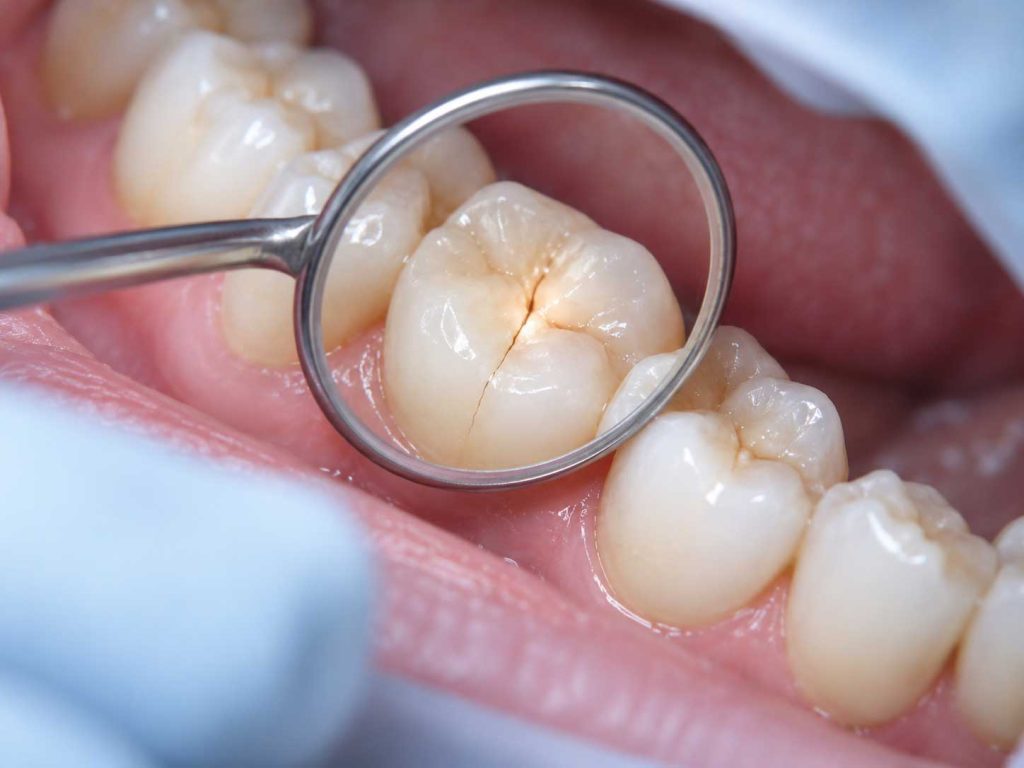
1. A Cracked Tooth
Cracks are probably the single most common reason a tooth reacts sharply to pressure. Some are obvious the moment you look in a mirror; most aren’t. The crack can be so fine that it’s invisible without magnification, yet the moment you bite down, the two sides of that crack shift ever so slightly against each other — and that tiny movement is enough to irritate the nerve tissue inside.
Typical signs include pain that’s sharp but unpredictable, discomfort specifically when you let go of your bite, sensitivity to temperature, pain that comes and goes rather than staying constant, and — frustratingly — real difficulty pinpointing exactly which tooth is the culprit. Cracks tend to develop after biting down on something hard, from grinding or clenching over the years, from an old injury, or simply from decades of normal wear. Catching one early matters, because a tooth that’s cracked but still stable can often be restored — wait too long, and the options narrow.
2. Tooth Decay
Cavities are sneaky in their early stages. They often cause no pain at all. It’s only once decay has worked its way through the enamel and into the dentin underneath that you start noticing sensitivity, and by the time it’s approaching the nerve, biting pressure alone can trigger real discomfort. Along the way you might also notice a reaction to sweets, or to hot and cold drinks.
A shallow cavity is usually a straightforward filling. Deeper decay is a different story, especially if bacteria have already reached the pulp — which is really the argument for not waiting until the pain becomes unbearable before getting it checked. Decay is, generally speaking, far simpler to manage the earlier it’s found.
3. A Filling That’s Loose, Broken, or Sitting Too High
Fillings do their job well, but nothing lasts forever. They wear down, crack, loosen, or come apart with time, and once that happens, part of the tooth can be left without proper support, or pressure can reach areas that used to be protected.
There’s a second possibility worth mentioning if the pain started right after a dental visit: sometimes a brand-new filling sits just barely higher than the surrounding bite. That means the treated tooth touches down before the others when you close your mouth — and even a fraction of a millimeter of extra contact can translate into real discomfort. This is a simple fix once it’s identified, which is why a quick bite check is one of the first things worth ruling out.
4. Inflammation or Infection Inside the Tooth
Underneath the enamel and dentin sits the pulp — soft tissue packed with nerves, blood vessels, and connective tissue. Deep decay, a crack, an old injury, or a failing filling can all give bacteria a path in, and once that happens, the pulp can become inflamed or infected. Biting pain tends to intensify here because pressure is transmitted straight through the tooth toward the tissue around the root.
Other things to watch for: a toothache that won’t let up, ongoing sensitivity to hot or cold, throbbing, pain severe enough to wake you at night, swelling near the tooth, or an unpleasant taste that won’t go away. If the pulp is too damaged to recover on its own, root canal treatment becomes the way to remove the infected tissue and keep the tooth in place.
5. A Dental Abscess
An abscess is an infection centered around a tooth or its root, and because the surrounding tissue is already inflamed, chewing can be especially painful. Warning signs tend to include severe or persistent pain, swollen gums, swelling that extends into the face or jaw, a small pimple-like bump on the gum, a bad taste or visible drainage, fever, and tenderness the moment you bite down.
This isn’t something to sit and monitor at home. The infection has a source, and that source needs treatment — antibiotics alone won’t resolve it, even though they’re sometimes used alongside treatment when an infection is spreading or causing broader symptoms. Depending on the situation, the actual fix might be drainage, a root canal, or an extraction.
6. Gum Inflammation or Periodontal Disease
Not every case of biting pain starts inside the tooth. Inflammation or infection in the gums — and in more advanced cases, in the bone and ligament that support the tooth — can make chewing uncomfortable on its own. Look out for gums that are red, swollen, or bleed easily when you brush or floss, gum recession, breath that stays bad no matter what you do, tenderness around a particular tooth, or a tooth that feels the slightest bit loose. Sorting out whether the pain is coming from the gums or from inside the tooth is exactly what a dental exam is for.
7. Grinding or Clenching
A lot of people clench their jaw without ever realizing it — during sleep, or in moments of concentration or stress. Over time, that repeated pressure adds up: teeth become tender, chewing turns uncomfortable, enamel wears down or develops small cracks, jaw muscles get sore, and mornings sometimes start with a dull headache. If it’s not just one tooth that hurts but several, grinding or clenching is often part of the conversation.
Why Does It Hurt More When You Release the Bite?
This particular pattern — pain right as you let go, rather than while you’re pressing down — tends to point toward a crack. While you’re biting, the cracked segments shift slightly apart; the moment you release, the tooth springs back toward its original shape, and that movement is what irritates the sensitive tissue inside. It’s not a guaranteed sign of a crack, but it’s a detail worth mentioning to your dentist, because it narrows things down considerably.
Will It Just Go Away on Its Own?
Occasionally, minor irritation does settle by itself. But as a rule, pain that keeps coming back when you bite shouldn’t be ignored. A cavity doesn’t heal itself once there’s an actual hole. A structural crack doesn’t stay the same size forever — it tends to progress. And an infected pulp, left alone, doesn’t quietly return to health.
What makes this trickier is that the pain itself can come and go even while the underlying problem is still there, quietly getting worse. If a tooth keeps hurting when you chew, having it looked at sooner rather than later is the safer bet.
What To Do In the Meantime
Until you can get in for an appointment, the main goal is to keep pressure off the affected tooth. That means:
- Chewing on the other side of your mouth
- Steering clear of hard or crunchy foods for now
- Keeping the area clean with gentle brushing and flossing
- Rinsing with warm salt water if the gums feel irritated
- Skipping the old trick of pressing aspirin directly against the tooth or gum — it doesn’t help, and it can actually irritate the tissue
Over-the-counter pain relief can take the edge off temporarily, when it’s safe for you to take it, but it isn’t treating whatever’s actually causing the pain.
When Does This Become an Emergency?
If the pain is sticking around, getting worse, or making it hard to eat, it’s time to get seen. Certain symptoms bump that up to urgent: swelling in the face or jaw, fever, gums that are visibly swollen, drainage or a persistent bad taste, pain that’s severe and unrelenting, or a tooth that’s visibly broken. And if swelling starts affecting your breathing, swallowing, or spreads toward your eye or neck, that’s not a wait-and-see situation — seek medical care right away.
How a Dentist Figures Out What’s Going On
Most exams start with a conversation — when the pain began, what seems to trigger it, what it feels like. From there, your dentist will check for decay or cracks, look over any existing fillings or crowns, examine the gums, see how your teeth meet when you bite, and test the tooth’s response to pressure and temperature. X-rays often come next, since they can reveal decay, infection, or bone changes that simply aren’t visible during a visual exam.
Treatment depends entirely on what’s found — it could mean adjusting a filling, treating decay, placing a crown to protect a cracked tooth, addressing gum disease, performing a root canal, or something else entirely.
Frequently Asked Questions
Why does only one tooth hurt when I bite down?
Pain confined to a single tooth can stem from decay, a crack, a damaged filling, uneven bite pressure, inflammation of the pulp, or an infection near the root. Telling these apart really does require an exam.
Can a cracked tooth hurt only while I’m chewing?
Yes — that’s actually a fairly classic pattern, and some people notice it particularly as they release their bite rather than while pressing down.
Why does my tooth hurt after getting a filling?
A bit of sensitivity right after treatment is normal. If the pain is mainly triggered by biting, the filling might just need a small bite adjustment. If it’s persistent or getting worse, that’s worth a follow-up.
Does pain on biting always mean I need a root canal?
No. There are plenty of possible causes — cracks, cavities, a loose filling, gum inflammation, or a bite that’s slightly off. Root canal treatment usually comes into play only when the pulp itself is irreversibly damaged or infected.
Can grinding my teeth actually cause this kind of pain?
It can. Repeated grinding or clenching puts extra strain on teeth and the tissue supporting them, which can leave them tender when chewing and more prone to wear and cracking over time.
Should I avoid chewing on the tooth that hurts?
For now, yes — keeping pressure off it until it’s been examined is a sensible precaution, especially if biting brings on sharp pain.
When should I actually book an appointment?
Any time the pain persists, keeps returning, gets worse, or shows up alongside temperature sensitivity, swelling, or throbbing.
Don’t Brush Off Pain When You Bite
A tooth that hurts when biting is telling you something has changed — even if it’s hard to say exactly what from the outside. Sometimes it’s as minor as a filling that needs a small adjustment. Other times it’s a crack, decay that’s gone deeper than expected, or an infection that’s already taking hold. The earlier the cause is found, the simpler treatment tends to be, and the more damage you’re likely to avoid.
If you’re dealing with tooth pain when chewing and need a dentist in Woodbridge, call Milani Dentistry at +1-905-856-9966 to set up an assessment.
