

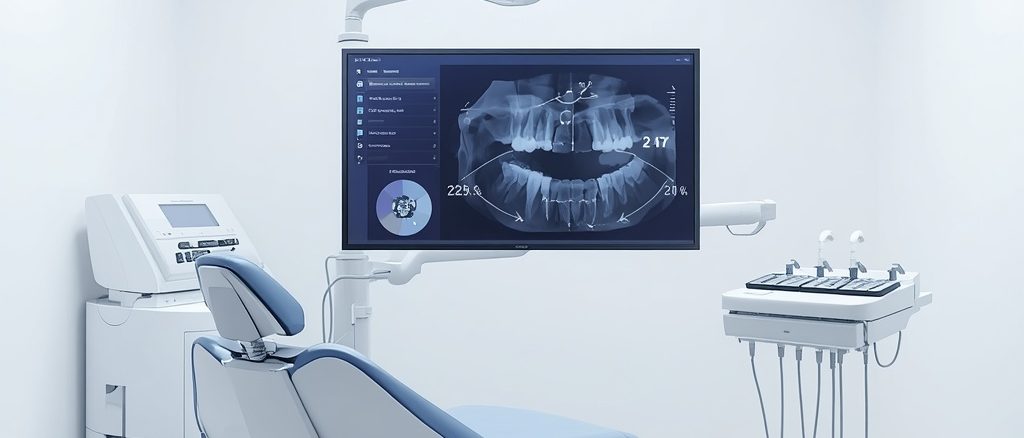
If you’ve been to the dentist lately, chances are some kind of artificial intelligence was quietly working in the background — even if nobody mentioned it.
AI has made its way into healthcare in a big way, and dentistry is no exception. From reading X-rays to mapping out implant placement, dental teams now have access to tools that can spot patterns a human eye might miss on a busy day. But here’s the question most patients actually care about: what does any of this mean for you, sitting in the chair?
Let’s clear something up first. AI isn’t taking over for your dentist. It’s not making the call on your treatment, and it never will. Think of it more like a very sharp assistant — one that helps your dental team review images, flag things worth a closer look, and plan care with a bit more precision. The judgment still comes from a trained professional who knows your history and can actually talk to you.
If you’re searching for a dentist in Woodbridge, understanding how this technology fits into modern care can take a lot of the mystery out of it. Here’s a look at seven ways AI is reshaping the dental experience.
What Exactly Is AI Doing in a Dental Office?
At its core, AI just means computer systems trained to recognize patterns in large sets of data. In dentistry, that data is usually X-rays, scans, and clinical records. Feed enough of that information into a well-built system, and it starts noticing things — early signs of decay, subtle shifts in bone density, irregularities worth flagging for the dentist.
Some of these tools are built specifically to scan X-rays. Others help with implant mapping, orthodontic planning, or digital scanning workflows.
This isn’t happening without oversight, either. The American Dental Association has put together standards specifically for AI in dentistry, covering things like safety, transparency, fairness, and proper validation before a system ever gets near a patient’s chart. The short version: AI is meant to back up a dentist’s judgment, not stand in for it.
1. Catching Problems Earlier
One of the more genuinely useful applications is image analysis. When your dentist pulls up a bitewing or panoramic X-ray, AI software can scan that same image and highlight spots that might deserve a second look.
That doesn’t mean the software is diagnosing anything on its own — far from it. It’s just adding another layer of information for your dentist to weigh alongside your symptoms, your history, and their own clinical exam. Where this tends to help most is with the small stuff: the early, faint signs of a problem that are easy to overlook when you’re reviewing dozens of X-rays a day.
2. Smarter Dental X-Rays
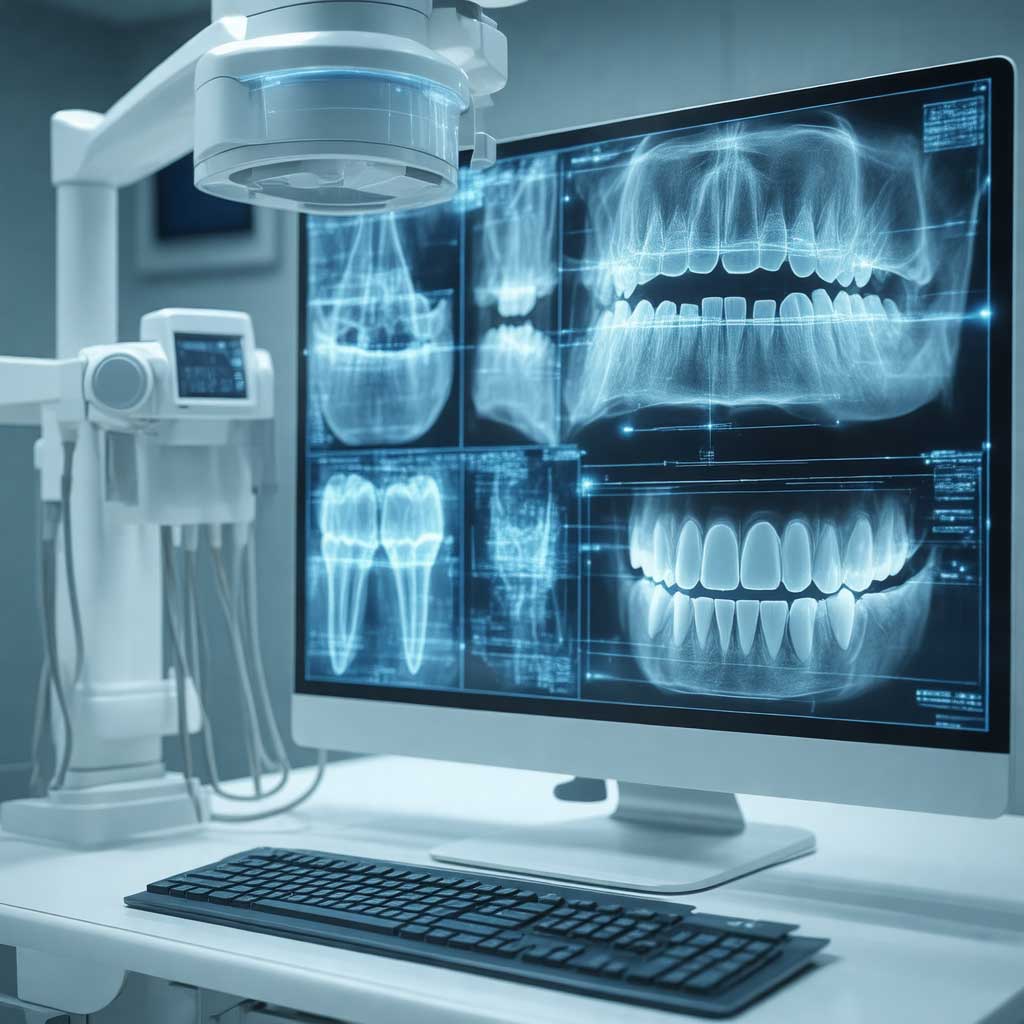
X-rays have been a dental staple for decades, but AI is changing how much information dentists can actually pull from them. Systems are now being trained to recognize specific findings — things like cavities, changes in bone level, or shifts in tooth structure.
The FDA has noted that AI-enabled tools in healthcare show real promise for image processing, early detection, and more personalized care. For patients, that could translate into a more thorough conversation with your dentist about exactly what’s showing up on your scan.
That said, these tools aren’t flawless. Image quality varies, every patient’s mouth is different, and a system is only as good as the data it was trained on. Which is exactly why an experienced dentist reading that image still matters more than the software producing it.
3. Treatment Plans Built Around You
No two mouths are alike, even when the underlying problem looks similar on paper. AI can help dentists pull together information from scans, images, and records to build a picture that’s more specific to you rather than a one-size-fits-all approach.
This becomes especially useful in digital dentistry, where a single visit might generate a lot of visual data. Instead of your dentist working off one isolated image, they can draw on a fuller digital record — and AI can help surface patterns across all of it.
The point was never to make treatment planning automatic. It’s about giving your dentist better information before they sit down with you and figure out what actually makes sense for your care.
4. Better Planning for Dental Implants
Implant planning is one of the more technically demanding parts of dentistry — bone density, nearby nerves and structures, the position of neighbouring teeth, and how the final restoration will actually sit. There’s a lot to account for.
Recent research reviews have looked at how AI can assist with identifying anatomical landmarks, assessing bone volume, and supporting virtual implant planning. Early evidence suggests it may improve consistency, though researchers are still building out the data on this.
If you’re weighing a dental implant in Woodbridge, this kind of digital planning may already be part of the process your dental team uses. Still, no algorithm makes the final call. Your dentist needs to look at your bone health, your bite, your medical history, and your long-term goals before recommending anything.
5. A Bigger Role in Preventive Care
Good dentistry isn’t just about fixing problems after they show up — it’s about catching them before they do. This is one area where AI’s potential is especially interesting: systems that can analyze patterns in your clinical history and help flag where closer monitoring might be worthwhile.
Picture a visit where your dentist isn’t just looking at today’s scan in isolation, but can pull up years of records alongside it to spot changes over time. That kind of context could make preventive care feel a lot more personal.
None of this replaces the basics, though. Brushing twice a day, flossing, cutting back on frequent sugar, and keeping up with regular checkups still do most of the heavy lifting.
6. A More Efficient Digital Workflow
AI is part of a much bigger shift toward digital dentistry — one that also includes intraoral scanners, 3D imaging, and computer-aided design. What AI adds is another layer of interpretation on top of all that digital information.
You might not notice this directly at your next appointment. But you may find your dentist showing you a sharper digital image, walking you through a treatment plan more visually, or explaining a procedure with more detail than they could a few years ago. A lot of that runs on technology working quietly behind the scenes.
7. AI Still Can’t Replace Your Dentist
This might be the most important point in the whole conversation.
AI can process information fast, but dentistry is about a lot more than pattern recognition. Your dentist listens to what’s actually bothering you. They examine your teeth and gums directly. They factor in pain, sensitivity, medications, past treatments, and your day-to-day life — things a scan alone can’t tell them.
They’re also the ones explaining your options in plain language and helping you decide what’s right for you. AI can support that process, but it can’t replace the relationship between a patient and their dental team. The ADA’s current standards lean heavily on this point too, with an emphasis on transparency, fairness, privacy, and proper validation — because a tool that produces a result still needs a professional to interpret it correctly.
So Is AI Actually Safe to Use in Dentistry?
It depends on the system and how it’s being used. AI-enabled healthcare tools are increasingly going through formal regulatory and clinical review. The FDA, for instance, keeps a running list of AI-enabled medical devices that have cleared the bar for marketing authorization in the U.S.
Dental-specific AI is getting more scrutiny too. The ADA’s standards for evaluating AI-based image analysis tools include guidance on how the underlying datasets are built and annotated — because an AI system is only as trustworthy as the data and testing behind it.
Bottom line: think of AI as a tool operating inside professional dental care, not something making decisions on its own.
What Does This Mean for You as a Patient?
Honestly, you probably won’t notice AI directly during most visits. Its impact tends to show up indirectly — sharper imaging, more thorough treatment planning, clearer explanations, and workflows that run a little smoother behind the scenes.
The real opportunity here isn’t just “more technology for technology’s sake.” It’s using these tools to make dental care feel more informed, more personalized, and more focused on you specifically.
If you’re looking into a Woodbridge dentist, it’s worth asking how their office actually uses digital tools during diagnosis and treatment planning. A good practice should be able to explain both what the technology does and where its limits are.
A Few Common Questions About AI in Dentistry
Can AI replace a dentist? No. It can support clinical decisions, but diagnosis and treatment still require a professional’s judgment and a proper evaluation of you as an individual patient.
Can AI actually detect cavities on X-rays? Some systems are built for exactly that. They’re meant to work alongside a dentist’s review, not replace it.
Does AI help with dental implants? Yes — research has looked at AI for implant planning, anatomical detection, and bone assessment. But a dentist’s clinical judgment still drives the final decision.
Will AI make treatment more accurate? It has potential to improve consistency, but accuracy still comes down to the technology, the data behind it, and the professional using it.
Is AI used in preventive dentistry? It’s an active area of research — risk assessment, monitoring, and image analysis are all being explored, and the role continues to evolve.
Should I ask my dentist if they use AI? Absolutely. Asking how digital tools factor into your diagnosis and treatment plan is a reasonable question, and a good dentist will walk you through both the benefits and the limitations.
Looking Ahead
AI is changing dentistry, but the most useful version of this technology isn’t necessarily the flashiest. Its real value shows up when it helps a dentist see more clearly, plan more carefully, and explain things to you more effectively.
As the research keeps developing, expect AI to play a bigger role in imaging, preventive care, orthodontics, implant planning, and digital workflows across the board — making for a more connected, more personalized visit to the dentist.
If you’re looking for a dentist near me in the Woodbridge area and want to know how modern dental technology fits into your care, the team at Milani Dentistry is happy to walk you through it. Call +1-905-856-9966 to ask questions or book an appointment.