


Most people think fresh breath starts with brushing their teeth. That is partly true, but it is not the whole story.
Your tongue also plays a big role in how your breath smells. Its surface is not smooth. It has tiny grooves and bumps that can trap bacteria, food particles, dead cells, and mucus. Over time, that buildup can create an unpleasant smell.
That is why Tongue Cleaning and Bad Breath are closely connected. If you brush and floss but still notice a stale taste or odour, your tongue may be part of the reason.
For many people, tongue cleaning is a small habit that makes a noticeable difference. It does not replace brushing, flossing, or dental visits. Still, it can support a cleaner mouth and fresher breath when done gently and consistently.
If you live in Woodbridge and deal with ongoing breath concerns, speaking with a dentist in woodbridge can help you understand the real cause.
Why Your Tongue Matters More Than You Think
Your tongue does more than help you taste food and speak clearly. It is also one of the busiest surfaces in your mouth.
Every day, your tongue touches food, drinks, saliva, teeth, and oral bacteria. Some bacteria are harmless and even helpful. Others can break down proteins and release smelly compounds. These odours are often strongest near the back of the tongue.
This is why breath can smell worse in the morning. During sleep, saliva flow slows down. Your mouth becomes drier, and bacteria have more time to grow. That dry, coated feeling on your tongue can make your breath feel heavy before breakfast.
A clean tongue can help your mouth feel fresher. It may also improve how clean your mouth feels after brushing.
How Tongue Bacteria Can Cause Bad Breath
Bad breath, also called halitosis, often starts inside the mouth. The tongue is one of the most common places where odour-causing bacteria collect.
These bacteria feed on small particles left behind after eating. As they break those particles down, they can produce volatile sulfur compounds. These compounds are known for their strong, unpleasant smell.
You may notice this more after coffee, garlic, onions, spicy foods, or a long day without enough water. Mouth breathing, smoking, certain medications, and dry mouth can also make the problem worse.
This does not mean every case of bad breath comes from the tongue. Gum disease, cavities, infected teeth, tonsil stones, sinus issues, acid reflux, and some health conditions can also play a role. That is why ongoing bad breath should not be ignored.
A woodbridge dentist can check whether the cause is simple buildup, gum inflammation, tooth decay, dry mouth, or something else.
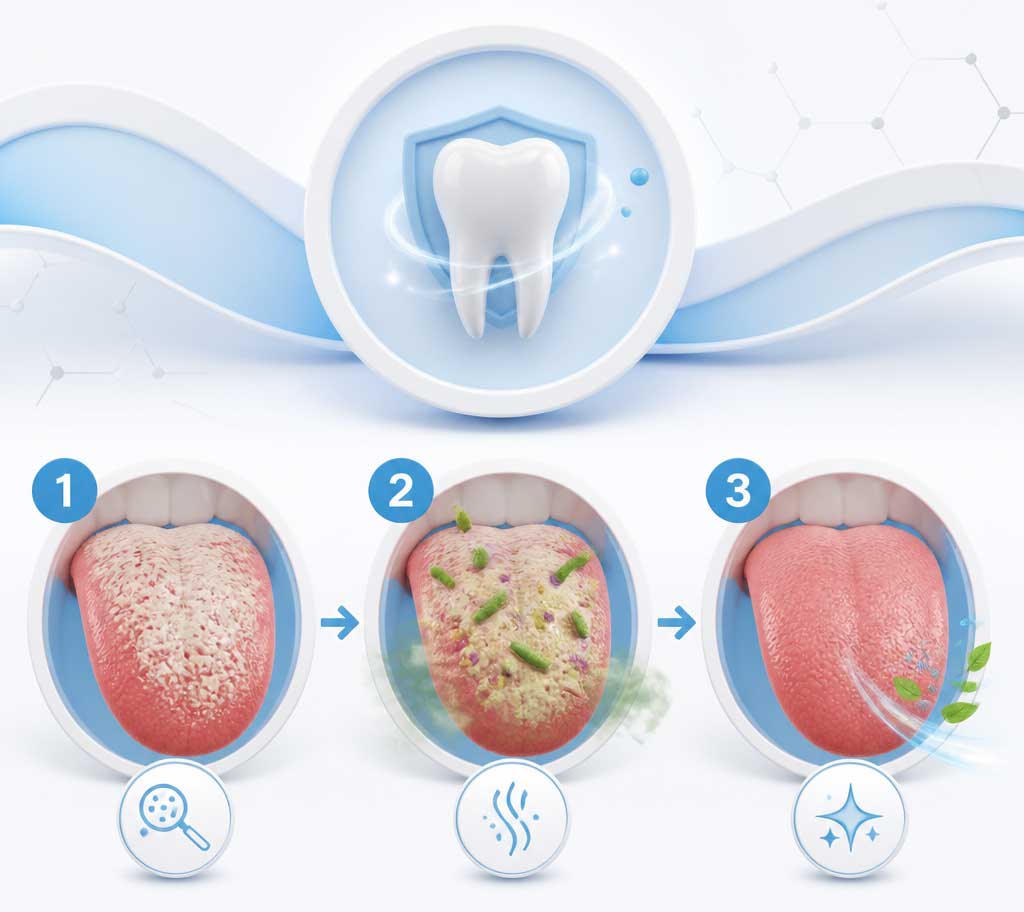
What a Coated Tongue May Mean
A coated tongue often looks white, yellowish, or grey. It may appear thicker toward the back of the tongue. In many cases, it comes from harmless buildup.
This coating can include bacteria, dead cells, food debris, and proteins from saliva. It may be more noticeable when you are dehydrated, sick, breathing through your mouth, or not cleaning your tongue.
Still, not every tongue change should be brushed off. A coating that does not improve, painful patches, bleeding, burning, sores, or lumps should be checked. Red or white patches that stay for more than two weeks also deserve attention.
Your tongue can sometimes give early clues about your oral health. If something looks unusual and does not go away, it is safer to ask a dental professional.
A trusted dental office in woodbridge can examine your tongue, gums, teeth, and soft tissues during a routine visit.
How to Clean Your Tongue Safely
Tongue cleaning should feel gentle, not harsh. The goal is to remove buildup, not scrape the tissue aggressively.
Start by brushing and flossing your teeth. Then rinse your mouth with water. Use a tongue scraper or a toothbrush with a tongue-cleaning surface. Place it near the middle or back part of your tongue, but not so far that it causes gagging.
Move the scraper or brush forward with light pressure. Rinse the tool after each pass. Two or three gentle passes are usually enough for most people.
Avoid digging into the tongue. If you see bleeding, soreness, or irritation, you are pressing too hard. Your tongue is soft tissue, not tile grout.
After cleaning, rinse your mouth again. Wash the scraper or toothbrush well and let it dry in a clean place.
This simple habit can be done once daily, often in the morning. Some people also prefer doing it before bed.
Tongue Scraper or Toothbrush: Which Is Better?
Both can help. A toothbrush is easy because you already have one. It can loosen surface buildup and freshen the mouth.
A tongue scraper may feel more effective for people with a coated tongue. It is designed to glide over the tongue and remove debris with less brushing motion. Many people find it faster and more comfortable.
The best tool is the one you can use gently and consistently. If a scraper makes you gag, start closer to the front of the tongue. Over time, you may be able to move slightly farther back.
Do not aim for a perfectly pink tongue every time. Some natural coating is normal. Overcleaning can irritate the tongue and make your mouth feel sore.
If your tongue always looks heavily coated, even with careful cleaning, book a dental checkup. There may be another reason behind the buildup.
Why Mouthwash Alone Is Not Enough
Mouthwash can make your breath smell better for a short time. It may also reduce some bacteria, depending on the type. But mouthwash alone does not remove the layer sitting on the tongue.
Think of it like rinsing a plate without wiping it. The plate may smell better for a moment, but the film is still there.
Some mouthwashes also contain alcohol, which can dry the mouth. For people already dealing with dry mouth, that can make bad breath worse later.
A better routine is simple: brush, floss, clean your tongue, drink enough water, and visit your dentist regularly. Mouthwash can be helpful, but it should not be your only plan.
If you are unsure which rinse is right for you, ask a dental professional before using it daily.
Dry Mouth and Bad Breath
Saliva is one of your mouth’s best natural cleaners. It helps wash away food particles and keeps bacteria from becoming too active.
When your mouth is dry, odours can build faster. This is why morning breath is so common. It is also why people who breathe through their mouth often notice worse breath.
Dry mouth can happen for many reasons. Common causes include dehydration, caffeine, alcohol, smoking, stress, mouth breathing, and certain medications.
To support better saliva flow, sip water through the day. Choose sugar-free gum if your dentist says it is safe for your teeth. Try to limit frequent snacking on sugary foods. If dry mouth continues, get it checked.
A dentist near me search may help you find local care, but choosing a clinic that checks the full mouth matters more than distance alone.
When Bad Breath Needs a Dental Checkup
Occasional bad breath happens to everyone. It may come from food, coffee, or a skipped brushing session. That kind usually improves quickly.
Ongoing bad breath is different. If your breath still feels unpleasant after brushing, flossing, tongue cleaning, and drinking water, there may be a deeper cause.
Gum disease is one common reason. Bacteria can collect below the gumline and create a smell that does not go away with home care. Cavities, cracked fillings, infected teeth, and poorly cleaned dental appliances can also contribute.
Dentures, retainers, night guards, and clear aligners can hold bacteria if they are not cleaned well. If you wear any of these, clean them exactly as directed.
You should also see a dentist if bad breath comes with bleeding gums, loose teeth, tooth pain, swelling, dry mouth, or a bad taste that keeps returning.
A woodbridge dentistry team can help identify whether the odour is coming from the tongue, gums, teeth, or another oral issue.
Simple Daily Habits for Fresher Breath
Fresh breath is not about one magic product. It usually comes from small habits done well.
Brush your teeth twice a day with fluoride toothpaste. Clean between your teeth once a day with floss or another interdental cleaner. Gently clean your tongue daily, especially if you see coating.
Drink water often. Try not to let your mouth stay dry for long periods. Limit tobacco, and reduce sugary snacks when possible. Clean retainers, dentures, sports guards, and night guards every day.
Regular dental cleanings are also important. Even excellent home care cannot remove hardened tartar once it forms.
If you are looking for a dentist in woodbridge, choose a clinic that takes time to understand your symptoms. Bad breath can feel personal, but dentists discuss it often. There is no reason to feel embarrassed.
FAQ
Does tongue cleaning really help bad breath?
Yes, it can help many people. The tongue can hold bacteria and debris that create odour. Gentle cleaning may reduce that buildup and improve breath freshness.
How often should I clean my tongue?
Once a day is enough for most people. Many prefer doing it in the morning. If your dentist gives different advice, follow their recommendation.
Is a tongue scraper better than a toothbrush?
A tongue scraper may remove coating more easily for some people. A toothbrush can also work. The most important thing is to use light pressure and avoid irritation.
Why does my tongue look white?
A white coating can come from bacteria, dead cells, dry mouth, or food debris. If it does not improve, or if it comes with pain or sores, see a dentist.
Can bad breath mean gum disease?
Yes, it can. Gum disease may cause persistent odour, bleeding gums, swelling, and a bad taste. A dental exam can confirm the cause.
Should I use mouthwash every day?
Some mouthwashes can help, but they should not replace brushing, flossing, or tongue cleaning. If you have dry mouth, ask your dentist before using alcohol-based rinses.
When should I see a dentist for bad breath?
Book a visit if bad breath continues despite good daily care. You should also go if you notice bleeding gums, tooth pain, dry mouth, swelling, or mouth sores.
Final Thoughts
Tongue cleaning is a small step, but it can make your mouth feel much fresher. It helps remove the coating where odour-causing bacteria often collect.
Still, Tongue Cleaning and Bad Breath should be understood as part of a bigger oral health picture. If the smell keeps coming back, your tongue may not be the only cause.
At Milani Dentistry in Woodbridge, Dr. Navid Milani and the dental team can check your teeth, gums, tongue, and overall oral health with care. If you have ongoing breath concerns or want a cleaner, healthier mouth, call +1-905-856-9966 to book a visit.
