

Most people don’t think about their wisdom teeth until something goes wrong. One morning you wake up with a dull ache in the back of your jaw, or you notice your gums look a little swollen. You push through it, hoping it passes. But a few days later, the discomfort is still there — and maybe getting worse.
Sometimes it starts so quietly that you almost convince yourself it’s nothing. Maybe it’s just food stuck somewhere. Maybe you slept wrong. But Wisdom Teeth Pain has a way of staying in the background and slowly becoming impossible to ignore.
If this sounds familiar, you’re not alone. Wisdom Teeth Pain is one of the most common dental complaints, and it’s something that shouldn’t be ignored. Understanding what’s actually happening inside your mouth can make all the difference in how quickly you get relief.
What Are Wisdom Teeth, Really?
Wisdom teeth — technically called third molars — are the last set of back teeth to come in. Most people grow four of them, usually between the ages of 17 and 25. Some people get fewer, and a lucky few never develop them at all.
In many cases, people don’t even notice when they start forming. There’s no dramatic signal at first. Just slow development deep in the jaw.
Thousands of years ago, these teeth were actually useful. Early humans ate rough, unprocessed foods that wore down their teeth faster, and the extra molars helped with chewing. But our jaws have gotten smaller over time while our tooth count stayed the same. The result? A crowding problem that causes real discomfort for a lot of people.
In modern dentistry, this mismatch is one of the most common reasons patients eventually visit a dentist in Woodbridge.
Why Do They Hurt So Much?
The short answer: there often isn’t enough room for them.
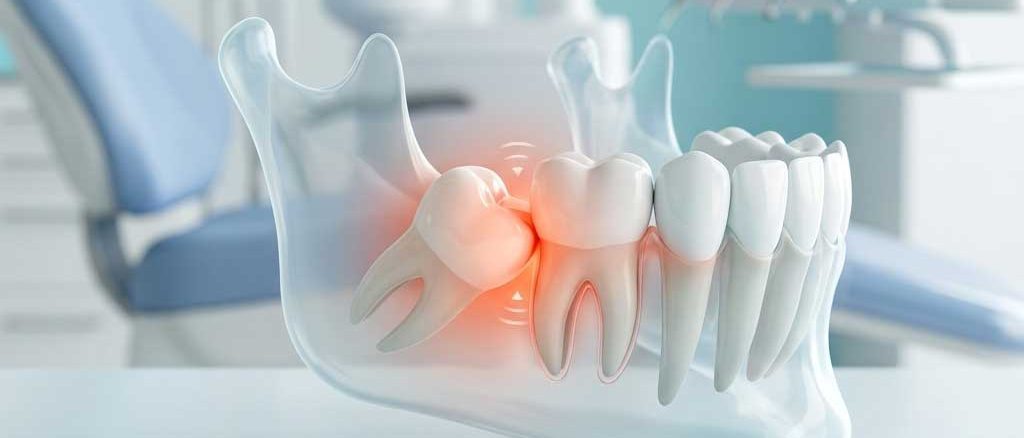
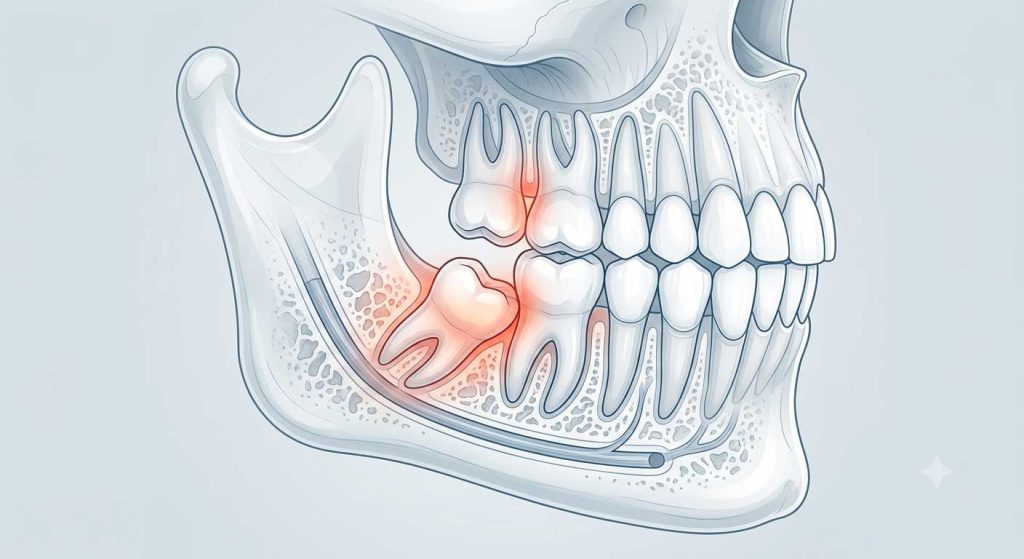
When a wisdom tooth tries to push through the gum but doesn’t have the space to come in straight, it becomes what dentists call impacted. It might tilt sideways, get stuck under the gum, or press against the tooth beside it. Any of these situations can lead to pain.
What makes it more frustrating is that the pain doesn’t always stay consistent. It can come and go, which makes people delay treatment longer than they should.
Here are the most common reasons wisdom teeth cause trouble:
Impaction — The tooth is blocked from fully erupting through the gum line. This puts pressure on surrounding tissue and nearby teeth.
Pericoronitis — When a tooth only partially breaks through the gum, it creates a small flap of tissue where food and bacteria can collect. This leads to infection and inflammation, which is surprisingly painful and often sudden.
Pressure on neighboring teeth — A wisdom tooth growing at an angle can push against the molar next to it, causing pain that radiates through the jaw and sometimes even feels like ear pain.
Decay — Wisdom teeth sit so far back in the mouth that they’re hard to clean properly. Decay and gum disease can develop without you realizing it until it becomes advanced.
What starts as a mild, achy feeling can quickly become sharp and persistent — sometimes spreading up toward the ear or down into the jaw.
Signs That It’s Time to See a Dentist
Pain in the back of the mouth isn’t always serious, but certain symptoms suggest something that needs attention sooner rather than later:
Persistent pain or pressure in the back of the jaw
Red, swollen, or bleeding gums near the back teeth
Difficulty opening your mouth fully
A bad taste or unusual smell that doesn’t go away
Swelling along the jawline or cheek
Headaches or ear pain without another obvious cause
Sometimes patients only notice one of these signs at first. But even one symptom, especially if it lingers, is worth checking.
Any of these — especially in combination — are your body’s way of signaling that something is off. Don’t wait for it to become unbearable. Many patients who visit a dentist in Woodbridge at the first sign of trouble end up with much simpler treatment than those who wait.
How a Dentist Diagnoses the Problem
Your dentist will start with a visual exam, checking for swelling, redness, and the position of the tooth. But the real clarity comes from X-rays.
Dental X-rays reveal what’s happening beneath the surface — the exact angle of the tooth, whether it’s pressing against another root, and whether there are any signs of infection or bone loss. This gives your dentist the full picture needed to recommend the right treatment.
Sometimes patients are surprised when they finally see the X-ray. What feels like “minor pain” is often more complex underneath.
At a dental office in Woodbridge, digital imaging makes this process fast and precise, allowing for same-visit diagnosis and treatment planning in most cases.
What Are the Treatment Options?
Not every wisdom tooth needs to come out. Treatment depends on what the X-rays show and how much discomfort you’re experiencing.
Monitoring
If your wisdom teeth have come in fully, are aligned properly, and aren’t causing problems, your dentist may simply recommend keeping an eye on them with regular checkups. Some people’s wisdom teeth never cause any issues at all, and that’s completely normal.
Medication
For mild infections or inflammation — particularly with pericoronitis — your dentist may prescribe antibiotics or anti-inflammatory medication to calm things down first. This helps reduce pain and swelling, especially in early stages.
Extraction
When a tooth is impacted, infected, or causing damage to neighboring teeth, removal is usually the best long-term answer. Extraction sounds daunting, but wisdom tooth removal is one of the most routine dental procedures performed today.
Simple vs. Surgical Extraction — What’s the Difference?
The type of extraction you need depends on the tooth’s position.
Simple extraction is used when the tooth has fully erupted above the gum line and can be removed without cutting into tissue. It’s straightforward and typically heals quickly.
Surgical extraction is necessary when the tooth is partially or fully trapped beneath the gum or bone. The dentist makes a small incision to access the tooth, which may be removed in sections for easier retrieval.
Both procedures are performed under local anesthesia, so you won’t feel pain during the process. Most patients expect something worse than what they actually experience. In reality, modern techniques have made both types much more comfortable than people expect.
Recovery: What to Expect
Most people feel noticeably better within two to three days after extraction. Full healing of the tissue typically takes one to two weeks, though this varies by person.
To support a smooth recovery:
Rest for the first day. Don’t rush back into normal activity too quickly.
Stick to soft foods — yogurt, soup, mashed potatoes, smoothies.
Use an ice pack on the outside of your cheek to reduce swelling, especially in the first 24 hours.
Be gentle when cleaning your mouth. Avoid rinsing aggressively or using a straw in the first few days.
Take any prescribed medication as directed, even if you start feeling better.
Some swelling and mild discomfort are completely normal in the first couple of days. Healing is rarely perfectly linear.
However, if pain becomes severe or gets worse after the third day, contact your dentist — it could be a sign of dry socket or infection.
Why You Shouldn’t Wait
Wisdom tooth problems almost never resolve on their own. Left untreated, a partially erupted tooth can develop a deeper infection, damage the root of the tooth beside it, or lead to cyst formation around the impacted tooth.
The longer it stays untreated, the more complicated the situation can become. What starts as a manageable ache can turn into something that requires more time, more cost, and more involved treatment.
Early evaluation doesn’t just save you pain; it saves you time and money too.
Patients who come in at the first sign of trouble — often searching for a dentist near me when symptoms spike — tend to have far better outcomes than those who delay.
Frequently Asked Questions
Why do wisdom teeth hurt more than other teeth?
Because they often don’t have enough space to grow properly, leading to pressure and infection.
Do wisdom teeth always need to be removed?
No. If they are healthy, straight, and cleanable, they may stay without issues.
Is the extraction procedure painful?
No, local anesthesia prevents pain during the procedure. Discomfort afterward is usually mild and temporary.
How long does recovery take?
Most people feel better in two to three days, with full healing in one to two weeks.
What happens if I ignore the pain?
It can lead to infection, damage to nearby teeth, and more complex treatment later.
Can a general dentist remove wisdom teeth?
Yes, many cases are handled in general practice depending on complexity.
Ready to Feel Better?
If you’ve been dealing with wisdom tooth discomfort — even mild or on and off — it’s worth getting it checked before it escalates.
At Milani Dentistry, we take a calm, gentle, and patient-first approach to diagnosis and treatment. Whether it’s monitoring, a simple extraction, or a more complex case, everything is explained clearly so you always know what’s happening.
📞 Call +1-905-856-9966 to book your consultation and take care of the problem before it takes over your comfort